Aug 30, 2009

Buddha kathā - part 3

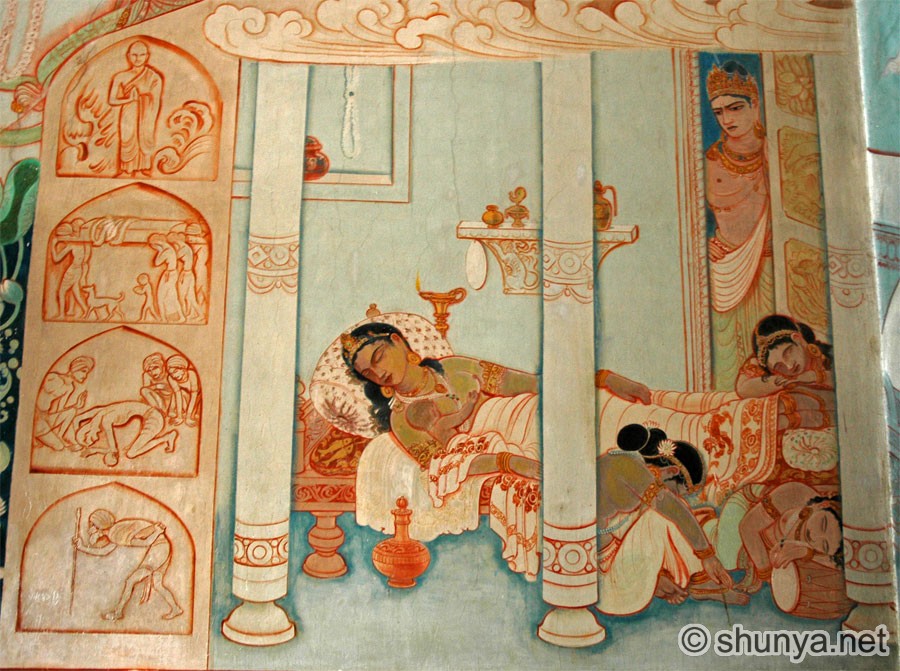
ekadā rātrau siddhārtho bhāryāṃ putraṃ prāsādañcātyajat | so aśvam ārohad vanañ cāgacchat | vane so'śvamapyajat | sa keśānakṛntannadyāñcākṣtipat | sa sarvāṇi bhūṣaṇānyapyanale'kṣipat | so'vadat - adhunāhammunirbhaveyamiti | tataḥ sa satyasya darśanāya grāmādgrāmaṃ vanādvanaṃ deśāddeśamabhrāmyat |
In a night, Siddhārtha abandoned the wife son and palace. He mounted the horse and left to the forest. In the forest he also abandoned the horse. He cut the hair and threw it in the river. He also threw in the fire all ornaments. He said: now I will become an hermit. Therefore for the sake of the vision of truth he wandered from village to village, from forest to forest from region to region.
sa yaṃ yaṃ munimapaśyattaṃ taṃ so'pṛcchat | sa yadyatpustakamalabhata, tattat pustakaṃ so'paṭhat | tathāpi sa satyaṃ nābodhat | ekadā so'cintayat - yadyahamammaṃ na bhakṣayeyam, jalamapi na pibeyam, tarhyahaṃ satyaṃ paśeyam iti | tataḥ so'annaṃ jalañcātyajat | sa vṛkṣasyādho'sīdat |
He questioned each and every hermit he saw. He read each and every book he obtained. However he didn't learned the truth. Once he was thinking: If I'll not eat food nor drink water then I may see the truth. So he renounced to the food and water. He sat below a tree.

Aug 29, 2009

Buddha kathā - part 2

yadā māyādevī sukhārthaṃ vane'bhrāmyat tadā vana(y) eva tasyāḥ putro'jāyata | sa siddhārthaḥ |
When Māyādevī was wandering for pleasure in the forest, then, right in the forest her son was born. He is Siddhārtha.
yadā bālaṃ siddhārtham munyo'paśyaṃs tadā te'bhāṣanta - he śuddhodana, eṣa tava putro yadi nṛpo bhavettarhi sa sarvasya lokasya nṛpo bhavet | kintu yadi sa loke duḥkhaṃ paśyettarhi sa munireva bhavet | tadā sa sarvasya lokasya gururbhavediti |
When hermits saw the boy Siddhārtha they spoke: Oh Śuddhodana, if this son of you will become a king then he will become the king of entire world. However if he will see the suffering in the world then he will became an hermit. Then he will became the guru of entire world.
yadā śuddhodano nṛipo munīnāṃ tadvacanam abodhat tadā so'cintayat - mama putro nṛpa eva bhavatu | sa sarvasya lokasya nṛpo bhavatu | sa mā vanaṅ gacchatu | mā ca sa munir bhavatv iti |
When king Śuddhodana learne this word of the hermits he thought: let my son to be king. Let he be hte king of entire world. Let him not go to forest. An he should not become hermit.

Buddha kathā - part 1

purā bhāratadeśe kapilavastunagare śuddhodano nāma nṛpo'bhavat |
Long ago, in India in Kapilavastu town lived a king named Śuddhodana.
tasminnagare sarve janāḥ sukhenāvasan |
In this town all people lived with happiness.
janānāṃ sukhena nṛpo'pi sukhamalabhata |
By people's happiness even the king was happy.
sa nṛpaḥ sarvāṇi śāstrāṇyabodhat, sarvadā ca satyamevābhāṣata |
This king kew all sacred writings and always talked the truth only.
tasya bhāryā māyādevī |
His wife was Māyādevī.
tasyāḥ sarve guṇā avartanta |
She had all the qualities.

Aug 18, 2009

Just a nice picture


The picture, a watercolor, is the cover of a Russian translation of Vimalakīrtinirdeśasūtra( Сутра «Поучения Вималакирти»).

Aug 1, 2009

Abhinava on knowledge and ignorance

iha jñānaṃ mokṣakāraṇaṃ bandhanimittasya ajñānasya virodhakatvāt dvividhaṃ ca ajñānaṃ buddhigataṃ pauruṣaṃ ca tatra buddhigatam aniścayasvabhāvaṃ viparītaniścayātmakaṃ ca /

Here the knowledge is the cause of liberation because is being the opponent of ignorance which is the reason of bondage and the ignorance is twofold: in the intellect and humane; there, the intellectual is of nature of non-knowledge (a-niścaya) and wrong/reversed knowledge(viparīta-niścaya).

pauruṣaṃ tu vikalpasvabhāvaṃ saṃkucitaprathātmakaṃ tad eva ca mūlakāraṇaṃ saṃsārasya iti vakṣyāmo malanirṇaye /

But the humane [ignorance] is of nature of imagination and contracted expansion; "and this one is the root cause of transmigration (saṃsāra)" we will say in the discussion on impurity.

(Abhinavagupta - Tantra Sāra)