Thanks to
Somdev Vasudeva who pointed towards and to amazing people who made it available the
NGMCP Newsletter is a rich source of high quality Indological information. In the following lines is an article from the first issue about a kāvya work named Kaliyugasaṃghātaka. I chose it because the poem charmed me with its ever changing rhythms (...so far. I'll try to read it in the following days).
[The text of the article without the notes.
Click this to download the issue]
Kaliyugasaṃghātaka
Diwakar Acharya
(University of Kyoto)
I discovered this text of 50 verses in various metres entitled
Kaliyugasaṃghātaka in the NGMPP microfilms. The original palmleaf manuscript is preserved in the National Archives, Kathmandu. Its manuscript number is 1-866 and the NGMPP reel number is B 4/7. It has 12 folios of 22 x 4 cm size, including a blank folio at the end serving as a cover. Each folio contains four lines on both sides, a line contains about 36
akṣaras. The author of the text is not known, and none of these 50 verses are known to be included in any anthology. However, the manuscript is dated, the colophon telling us that it was copied on the first of the waning half of Mārga, NS 501 (November, 1380 A.D.),
a terminus ad quem.
It is possible that the text was written in, and did not circulate beyond the boundaries of, mediaeval Nepal. The author is innovative in choosing metres, and critical in presenting his feelings and reflections on what was going on around him. It is conceivable that the poem reflects some particular events that took place in the society in which the poet lived. His vocabulary is spectacular; he uses many rare words.
As the title says, it is ‘An Assemblage [of Verses = A Poem] on the Dark Age’. The
Kāvyādarśa of Daṇḍin knows
saṃghāta[
ka] as a type of poem. Daṇḍin names
muktaka,
kulaka,
kośa and
saṃghāta[
ka] as categories of poem inferior to an epic poem with chapter divisions, and one of its commentaries takes
saṃghāta[
ka] to be a poem on a certain theme in one single metre. However, our text which contains the (categorical?) element
saṃghātaka in its title is not written in one but 32 various metres. The poem begins with a metre of six syllables and goes on increasing up to 24 syllables till verse 49, with the exception of the last verse, written in a 14 syllable metre chosen as conclusion. I present here the list of these metres in the consecutive order of their use in the poem: Vidyullekhā, Uṣṇik, Acala, Pramāṇikā, Ravipulā, Anuṣṭubh, a new metre that I have not traced in Sanskrit works on prosody, another new metre, Viyoginī, Svāgatā, Rathoddhatā, Indravajrā, Upajāti, Upendravajrā, Mandākinī, Vaṃśastha, Drutavilambita, Aparavaktra, Puṣpitāgrā, Praharṣiṇī, Rucirā, [Dvir]Uddhatā, Vasantatilakā, Mālinī, Hariṇī, Pṛthvī, Śikhariṇī, Śārdūlavikrīḍita, Sragdharā, Śaṅkha Daṇḍaka and [Dvir]Uṣṇik.
Here I present my edition of the text with a positive apparatus. I do not report irregularities concerning sibilants and gemination. A translation of the text and comments on the content will follow.
[The text follows]
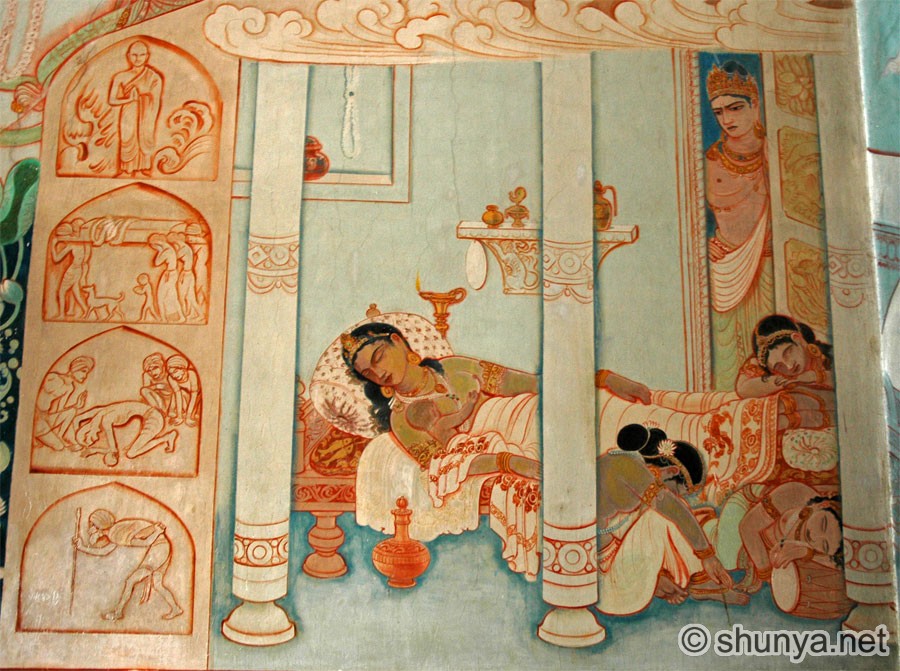
 ekadā rātrau siddhārtho bhāryāṃ putraṃ prāsādañcātyajat | so aśvam ārohad vanañ cāgacchat | vane so'śvamapyajat | sa keśānakṛntannadyāñcākṣtipat | sa sarvāṇi bhūṣaṇānyapyanale'kṣipat | so'vadat - adhunāhammunirbhaveyamiti | tataḥ sa satyasya darśanāya grāmādgrāmaṃ vanādvanaṃ deśāddeśamabhrāmyat |